Bramble
Gin, lemon and sugar over crushed ice with blackberry liqueur bleeding through. A modern London classic.
- MethodBuilt
- GlassRocks (old fashioned) glass
- IceCrushed
- Strengthabout 16.4% ABV
- BaseGin
- Tastefruity, sour, refreshing
Recipe
| 45 ml 1½ oz | London dry gin |
| 22.5 ml ¾ oz | Fresh lemon juice |
| 15 ml ½ oz | Simple syrup (1:1) |
| 15 ml ½ oz | Crème de mûre (blackberry liqueur) |
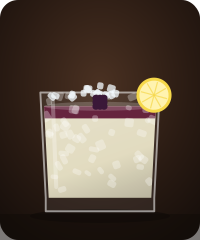
Garnish. A fresh blackberry and a half wheel of lemon on top of the ice.
Method
- Fill a rocks glass with crushed ice.
- Shake the gin, lemon juice and syrup with ice, or stir them straight in the glass.
- Strain over the crushed ice and add a little more ice to form a dome.
- Drizzle the blackberry liqueur over the top so it bleeds down through the ice, then garnish.
About the Bramble
The Bramble is a gin sour served over crushed ice with blackberry liqueur poured over the top. The first sips are sharp and lemony; the berry liqueur sinks through as you drink, making it fruitier towards the end. It looks striking and is easy to make well.
History
Documented
Dick Bradsell created the Bramble at Fred's Club in Soho, London, in 1984. He described it as an English drink inspired by blackberry picking as a child on the Isle of Wight, built on a gin sour with the crushed ice of a cobbler. It spread through London bars in the 1990s and is now taught as a standard.
Legend and lore
No rival origin story is told. A few accounts give the date only as the mid-1980s rather than 1984 exactly.
Variations
- Cassis Bramble. Blackcurrant liqueur instead of blackberry; darker and more tart.
- Clover Club. An older berry and gin sour, shaken with egg white and served up.
- Espresso Martini. Another Dick Bradsell drink from 1980s London.
Bartender's notes
- Crushed ice is part of the drink. If you have none, wrap cubes in a tea towel and hit them with a rolling pin.
- Pour the liqueur last and slowly for the bleeding effect.