Daiquiri
White rum, fresh lime and sugar, shaken hard and served straight up. Three ingredients with nowhere to hide.
- MethodShaken
- GlassCoupe
- IceNone (served up)
- Strengthabout 15.0% ABV
- BaseRum
- Tastesour, refreshing
Recipe
| 60 ml 2 oz | White rum (light, Spanish-style) |
| 22.5 ml ¾ oz | Fresh lime juice |
| 22.5 ml ¾ oz | Simple syrup (1:1) |
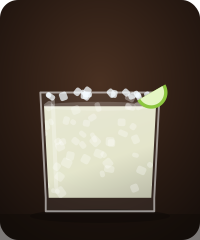
Garnish. A thin lime wheel on the rim, or nothing at all; the drink is meant to be judged on its own.
Method
- Chill a coupe with ice and water while you build the drink.
- Put the rum, lime juice and syrup in a shaker and fill it with ice.
- Shake hard for 12 to 15 seconds, until the tin is painfully cold.
- Empty the coupe and double strain the drink into it.
About the Daiquiri
The Daiquiri is a rum sour in its barest form: light rum, lime juice and sugar, shaken until very cold. Made well it is bright, clean and dangerously easy to drink, with the rum's sugarcane character just showing through the citrus. Because there are only three ingredients, the balance of sour to sweet is everything, and it is the drink many bartenders make to test a new rum or a new colleague.
History
Earliest record 1914: Jacques Straub, Drinks (spelled Daiguiri)
Documented
Rum, lime and sugar were mixed together in the Caribbean long before anyone wrote the combination down as a cocktail. The name comes from Daiquirí, a beach and iron-mining district near Santiago de Cuba where American engineers worked after 1898. The earliest appearance in a cocktail book is usually cited as Jacques Straub's Drinks (1914), where the name is misspelled. In Havana between the wars the drink became a signature of the bar El Floridita, whose bartender Constantino Ribalaigua served a numbered family of daiquiris, some of them blended with shaved ice.
Legend and lore
The usual origin story credits Jennings Cox, an American mining engineer at Daiquirí, with mixing the first one around the turn of the century when he ran short of gin for guests. A handwritten recipe attributed to him survives, but it is undated, and the idea that one man invented a mixture so common in Cuba is doubtful; at most he may have given it the name. A US naval officer, Lucius Johnson, is said to have introduced it to the Army and Navy Club in Washington around 1909.
Disputed or unclear: The Jennings Cox story rests on family papers and later retellings; who first called the drink a Daiquiri, and when, is not settled.
Variations
- Hemingway Daiquiri. Grapefruit juice and maraschino in place of most of the sugar; drier and sharper.
- Frozen Daiquiri. Blended with crushed ice into a fine slush, as served at El Floridita; use a little more syrup to make up for the cold.
- El Presidente. Another Havana rum classic, stirred with vermouth and curaçao rather than shaken with lime.
- Ti' Punch. The French Caribbean cousin: agricole rum, a coin of lime and cane syrup, built in the glass.
Bartender's notes
- Squeeze the lime just before you make the drink; juice that has stood for hours turns flat and bitter.
- If your rum is very light, cut the syrup to 15 ml; a fuller, funkier rum can take the full 22.5 ml.