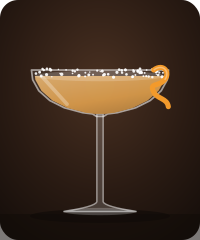
Sidecar
Cognac, orange liqueur and lemon, shaken and served up. The classic brandy sour of 1920s London and Paris.
- MethodShaken
- GlassCoupe
- IceNone (served up)
- Strengthabout 18.9% ABV
- BaseBrandy
- Tastesour, strong, fruity
Recipe
| 45 ml 1½ oz | Cognac (VSOP) |
| 22.5 ml ¾ oz | Orange liqueur (triple sec) |
| 22.5 ml ¾ oz | Fresh lemon juice |
Garnish. An orange twist expressed over the drink; a sugared rim is a later habit, so offer it rather than insist on it.
Method
- Chill a coupe, and sugar half its rim if you are using sugar.
- Shake the cognac, orange liqueur and lemon juice hard with ice for 12 to 15 seconds.
- Double strain into the coupe.
- Express the orange peel over the drink and discard or drop it in.
About the Sidecar
The Sidecar is a brandy sour sweetened with orange liqueur: rich cognac, sharp lemon and the bittersweet orange of triple sec. It is dry, fruity and warming, a cocktail with a bit of weight. The proportions are argued over endlessly; this version leans on the cognac but keeps the lemon lively.
History
Earliest record 1922: Harry MacElhone, ABC of Mixing Cocktails; Robert Vermeire, Cocktails: How to Mix Them (both London)
Documented
The Sidecar first appears in print in 1922, in two books published in London: Harry MacElhone's ABC of Mixing Cocktails and Robert Vermeire's Cocktails: How to Mix Them. Early sources link it to Pat MacGarry, the bartender at Buck's Club in London, and say it was already popular in France. The early recipes use equal parts of brandy, orange liqueur and lemon; later writers, notably David Embury in the 1940s, pushed the balance firmly towards the brandy.
Legend and lore
The best-known story has an American army captain in Paris during the First World War arriving at his favourite bar in the sidecar of a motorcycle, and the bartender naming the drink after him. Harry's New York Bar in Paris and the Ritz have both been named as the place. There is no contemporary evidence for the captain or the motorcycle.
Disputed or unclear: Who first made the Sidecar, and whether in London or Paris, is not known.
Variations
- Between the Sheets. Rum joins the cognac for a lighter, stronger drink.
- Brandy Crusta. The 19th-century New Orleans ancestor, with maraschino, bitters and a sugar crust.
- Margarita. The same structure with tequila and lime.
- White Lady. Gin, orange liqueur and lemon, usually with egg white.
Bartender's notes
- Use a VSOP cognac or a good grape brandy; cheap brandy tastes thin and hot here.
- If your orange liqueur is a lower-strength triple sec, cut it to 15 ml or the drink turns sweet.