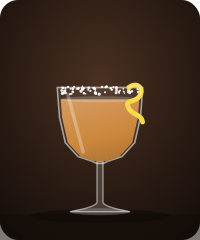
Brandy Crusta
Cognac, curaçao, maraschino, lemon and bitters in a sugar-crusted glass lined with lemon peel. New Orleans, 1850s.
- MethodShaken
- GlassSour (stemmed tumbler) glass
- IceNone (served up)
- Strengthabout 19.1% ABV
- BaseBrandy
- Tastestrong, sour, fruity
Recipe
| 60 ml 2 oz | Cognac (VSOP) |
| 7.5 ml ¼ oz | Dry orange curaçao |
| 7.5 ml ¼ oz | Maraschino liqueur |
| 15 ml ½ oz | Fresh lemon juice |
| 7.5 ml ¼ oz | Simple syrup (1:1) |
| 2 dashes | Aromatic bitters (Angostura-style) |
Garnish. A fully sugared rim (the crust) and a long spiral of lemon peel curled around the inside of the glass.
Method
- Moisten the rim of a small stemmed glass with lemon and dip it in caster sugar to make a crust.
- Cut a long, wide spiral of lemon peel and fit it around the inside of the glass.
- Shake the cognac, curaçao, maraschino, lemon, syrup and bitters with ice for about 12 seconds.
- Strain carefully into the prepared glass without washing off the sugar.
About the Brandy Crusta
The Brandy Crusta is a brandy cocktail with a little lemon juice, orange curaçao and maraschino, served in a glass crusted with sugar and lined with a whole lemon peel. It is fragrant and spirit-forward, only gently sour, with the sugar on the rim giving sweetness as you sip. It is the direct ancestor of the Sidecar.
History
Earliest record 1862: Jerry Thomas, How to Mix Drinks (New York)
Documented
The Crusta came from New Orleans in the mid-19th century and is credited to Joseph Santini, an Italian-born bartender who worked at the City Exchange and later ran his own bar, the Jewel of the South, from the 1850s. The recipe was printed in Jerry Thomas's How to Mix Drinks (New York, 1862), which helped it spread. It was one of the first drinks to add citrus juice to the basic cocktail of spirit, sugar and bitters. The 19th-century versions used only a small amount of lemon; modern bartenders generally add more.
Disputed or unclear: The date Santini first served the drink is not known; the 1850s is a general estimate.
Variations
Bartender's notes
- Make the sugar crust and peel lining before you shake; the drink should not wait.
- Peel the lemon in one long piece with a channel knife or a sharp peeler, starting at the top and going round.