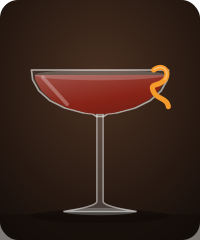
Boulevardier
Bourbon, sweet vermouth and red bitter aperitivo, stirred. A warmer, rounder Negroni for whiskey drinkers.
- MethodStirred
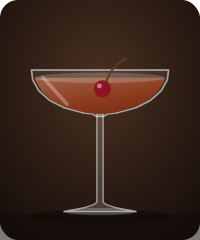
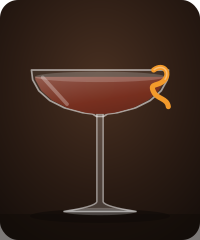
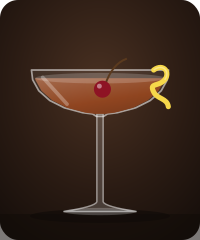
- GlassCoupe
- IceNone (served up)
- Strengthabout 21.9% ABV
- BaseWhiskey, Wine & aperitivo
- Tastebitter, strong, sweet
Recipe
| 45 ml 1½ oz | Bourbon or Rye whiskey |
| 30 ml 1 oz | Sweet (red) vermouth |
| 30 ml 1 oz | Red bitter aperitivo (Milan-style, about 25%) |
Garnish. A strip of orange peel squeezed over the drink and dropped in or laid on the rim.
Method
- Chill a coupe.
- Stir the whiskey, vermouth and bitter aperitivo with plenty of ice for about 25 seconds.
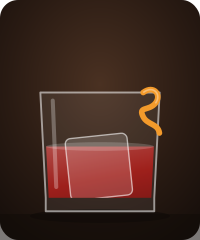
- Strain into the chilled coupe (or over a large cube in a rocks glass).
- Express the orange peel over the top.
About the Boulevardier
The Boulevardier swaps the Negroni's gin for whiskey, and the result is deeper and warmer: caramel and spice from the bourbon, bittersweet orange from the aperitivo, and wine and herbs from the vermouth. Most bartenders now give the whiskey a slightly larger share than the other two.
History
Earliest record 1927: Harry MacElhone, Barflies and Cocktails (Paris)
Documented
The drink appears in Harry MacElhone's Barflies and Cocktails (Paris, 1927), which credits it to Erskine Gwynne, an American writer who published a monthly magazine for English-speaking Paris called The Boulevardier. The book gives equal parts bourbon, bitter aperitivo and Italian vermouth. It was largely forgotten until bartenders picked it up again in the 2000s.
Legend and lore
It is often described as having been created at Harry's New York Bar in Paris for Gwynne. The 1927 book connects the drink to him and to MacElhone's circle, but it does not tell us who first mixed it or where.
Variations
Bartender's notes
- Rye makes a drier, spicier drink; a high-strength bourbon keeps it from tasting too sweet.
- Try it both up and on the rocks; over ice it opens out and softens as it dilutes.